Mission-critical programmes slip. The question is why.
NASA’s Webb review board named the cause: embedded problems. Mistakes made early, found months or years later.
Large hardware programmes are late more often than they are on time. That is not news to anyone who has worked on one. What matters more is why they are late, because the cause decides what a delay costs.
In 2018, an independent review board looked at the James Webb Space Telescope. Webb was planned for 2007. It launched in 2021. The board blamed much of the late slip on embedded problems: mistakes made early that nobody saw for months or years. Sunshield fasteners came loose in acoustic testing. A wrong solvent was used on propulsion valves. Wiring was tested incorrectly.
Look at other well-known delays and the same pattern appears.
In each case, the problem entered in design, in a process or at an interface. It surfaced in integration, in qualification, or on the pad. By then it was expensive to fix.
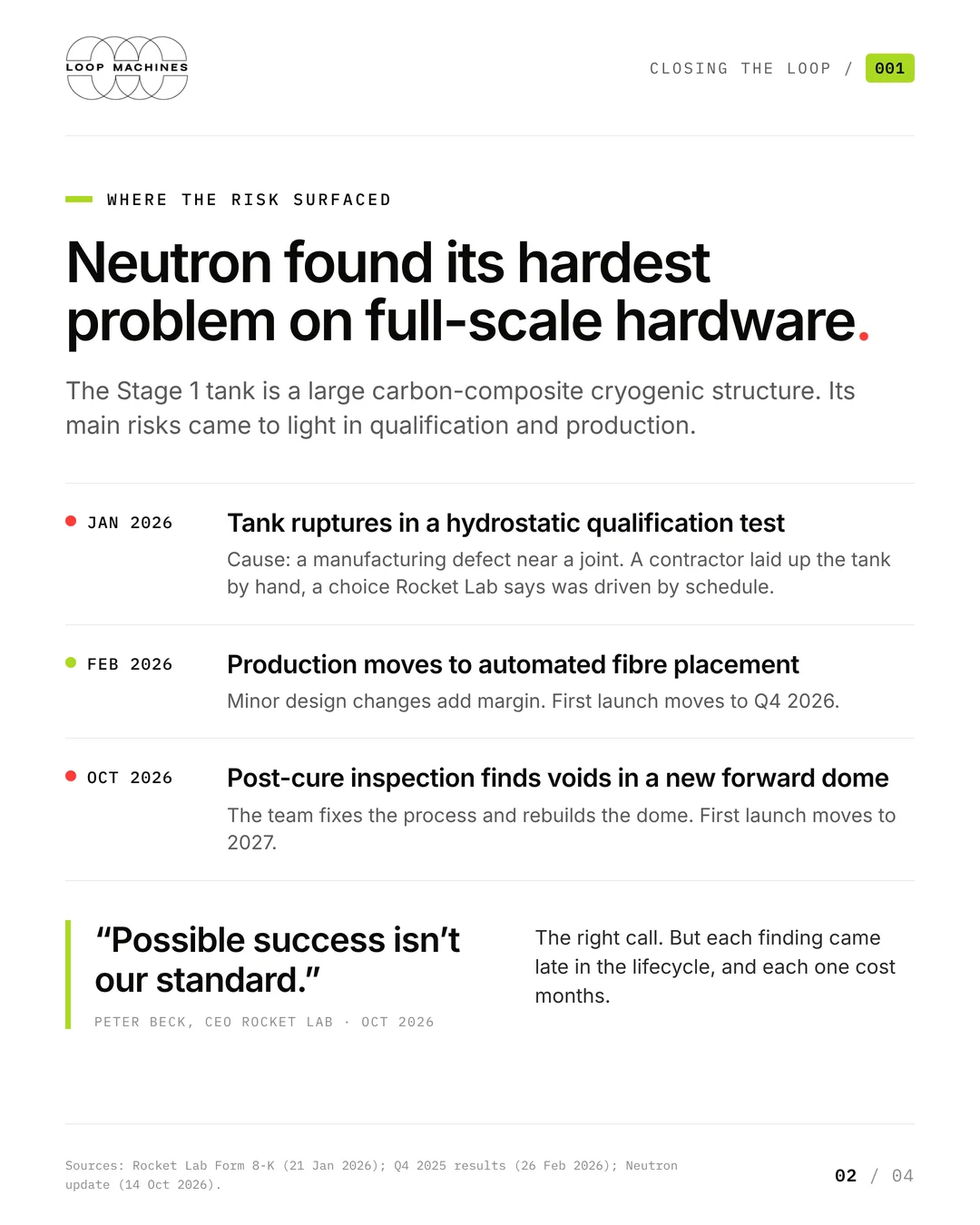
Neutron found its hardest problem on full-scale hardware
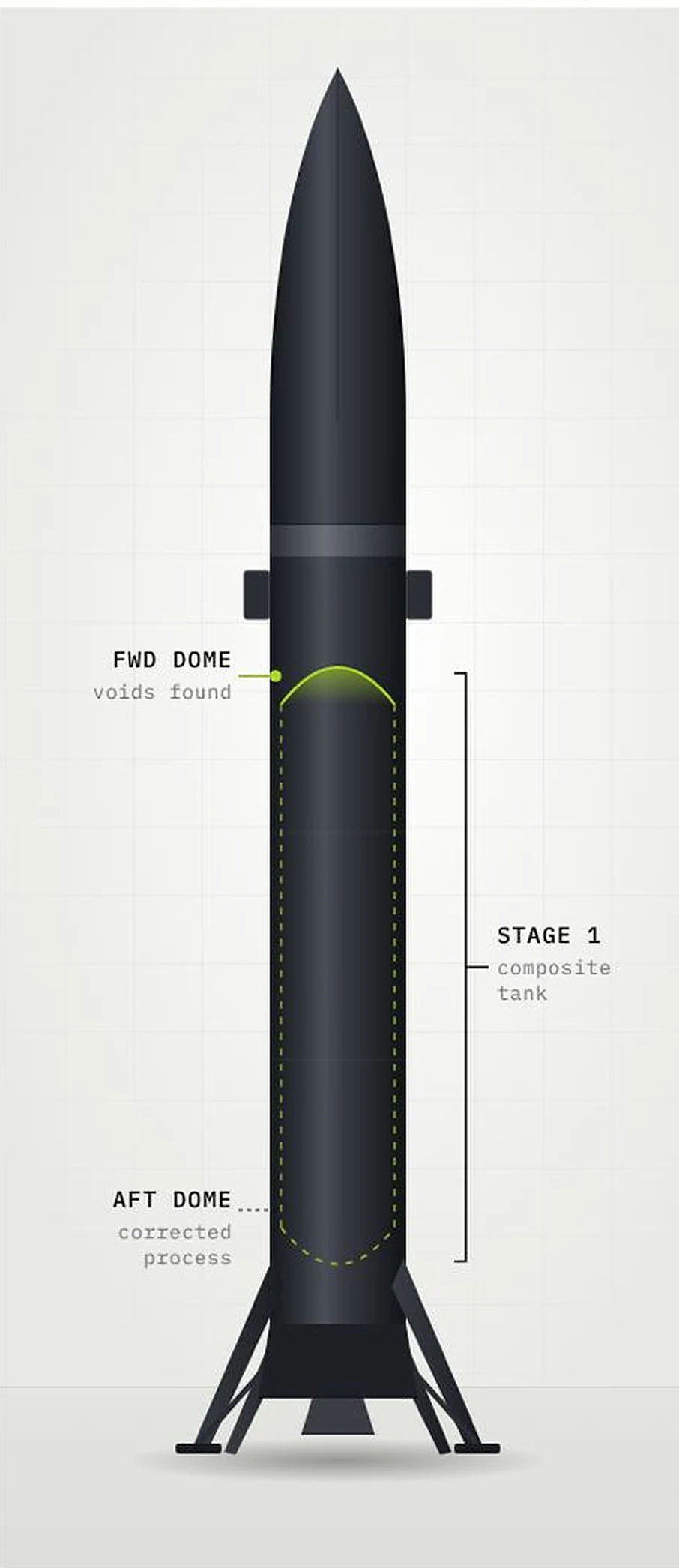
Rocket Lab’s Neutron is a recent example, and a well-documented one. The Stage 1 tank is a large carbon-composite cryogenic structure. Its main risks came to light late in the lifecycle.
“Possible success isn’t our standard.”Peter Beck, CEO, Rocket Lab · October 2026
Holding the launch was the right call. But each finding came on flight-like hardware, and each one cost months.
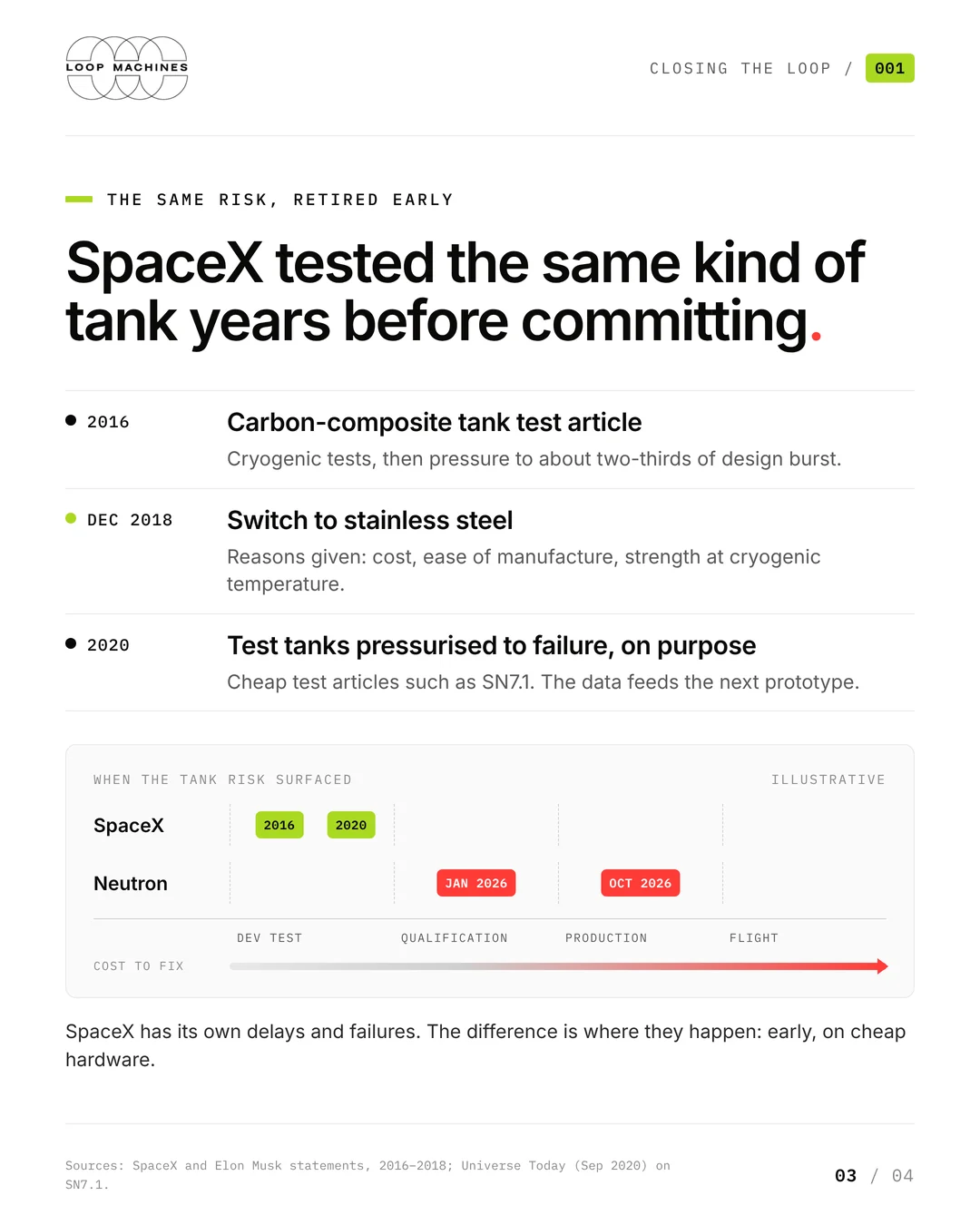
The same risk, retired early
SpaceX faced the same kind of problem: a large cryogenic tank in carbon composite. It met that risk years before it committed to a vehicle design.
SpaceX has its own delays and failures. The difference is where they happen: early, on cheap hardware, before the design is locked.
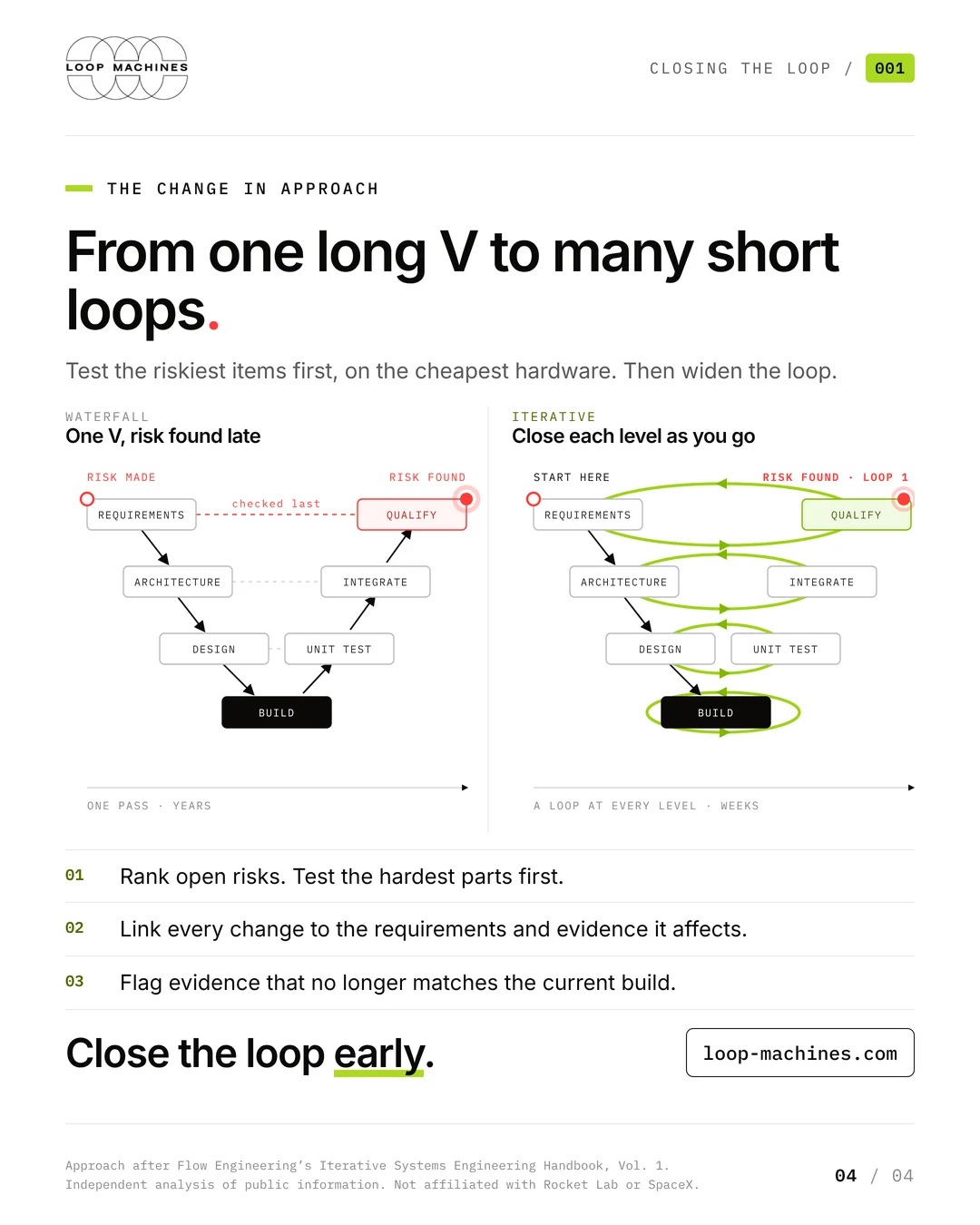
Bring the hard risks forward
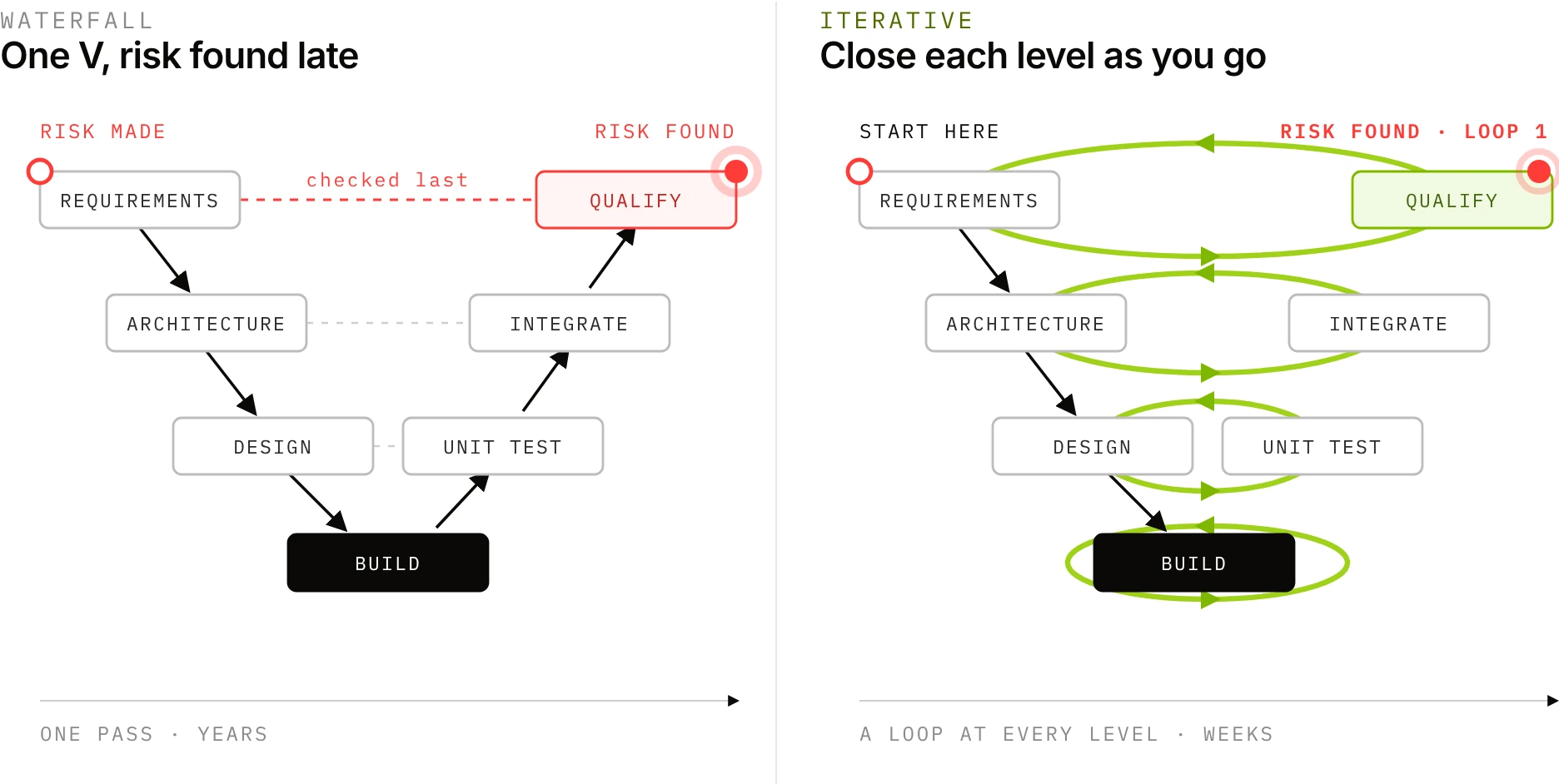
The classic V-model runs one long pass: requirements, design, build, then integration and qualification. The riskiest assumptions are checked last. An iterative approach turns the V into many short loops. The first loop is small and cheap, and it targets the highest-risk item. Each later loop widens the scope with what the last one taught. Flow Engineering’s Iterative Systems Engineering Handbook sums it up as “learn by doing”.
Teams do not need to copy SpaceX’s culture to use the lesson. They need to know two things at all times: which risks are still open, and what every change touches.
That is hard in practice. A layup process changes. Does the last pressure test still represent the part? A CAD tool changes at one site. Which interfaces are now unchecked? The answer usually lives in several tools and several people’s heads.
This is the problem we work on at Loop Machines:
- Link each change to the requirements, process specs and test evidence it affects.
- Flag evidence that no longer matches the current build.
- Rank open risks, so the team tests the hardest parts first.
The goal is simple. Find the embedded problem while it is still cheap.
This article is an independent analysis of public information. Loop Machines is not affiliated with Rocket Lab or SpaceX. Product examples are illustrative and use synthetic data.
All four slides
Download the PDF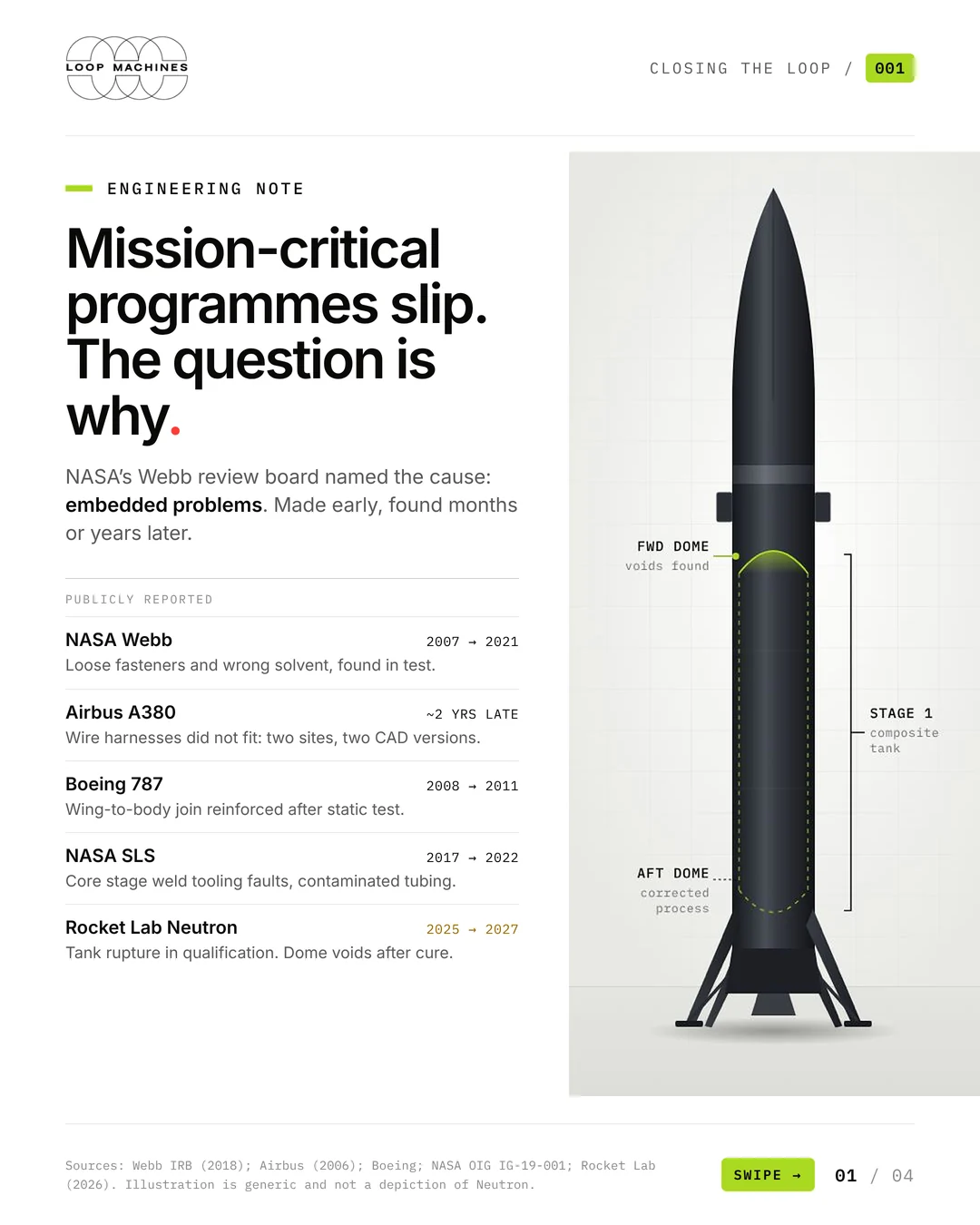
Sources
- AIP FYI: Webb cost-cap breach and review board findings (2018)
- Seattle Times: A380 wiring and CAD versions (2006)
- Leeham News: 787 side-of-body join (2009)
- IndustryWeek: first 787 delivery (2011)
- NASA OIG IG-19-001: SLS core stage (2018)
- Rocket Lab Form 8-K, Exhibit 99.1 (21 Jan 2026)
- Via Satellite: Neutron moves to late 2026 (Feb 2026)
- Space.com: Neutron moves to 2027 (Oct 2026)
- Rocket Lab: Neutron development update (14 Oct 2026)
- SpaceX Starship design history
- Universe Today: SN7.1 test tank (Sep 2020)
- Flow Engineering: Iterative Systems Engineering Handbook, Vol. 1
Illustrations are generic and do not depict a specific vehicle. Loop Machines is not affiliated with any company named in this article.